Friday, August 21, 2020

Designing an Asian Colonial-Era Sandbox - Part 1 (Broad Strokes)

A long, racist and bloody history lies behind colonialism - The Boar

LONG-ISH INTRO:

 I have a White Whale: ever since I read Richard G's take on a Counter-Colonial Heistcrawl, I've wanted to write a simple ruleset and sandbox-creation toolkit for a game revolving around the experience of Colonialism in South and East Asia. I want to engage with some of the ideas Richard raises, and make something that engages with the narrative space around colonialism, something that relies on stripped-down New-School-Revolution type game-play that players can easily engage in.

It wouldn't aspire to historical accuracy at all, in the same way that D&D doesn't aim to emulate eg 13th century Italian medieval culture, but is a hodgepodge of hundreds of years of McEurope tropes.

And I want it to take place in a play-space that has as its backdrop the massive upheavals of 17th and 18th century colonialism, in the same way that D&D relies on the backdrop of European feudalism, American Manifest Destiny expansionism, and centuries of heroic poetry mashed together.

Book references / Side note: I've been reading The Anarchy by William Dalrymple and Imperial Twilight by Stephen Platt, both excellent books. To the extent that history is really a kind of narrative structure imposed on the past, I've always felt that modern treatments of colonialism tended to subsume entirely different experiences under a simplistic heading. 'Colonialism' in the Americas, in Africa, in East Asia and South Asia, all get lumped together. Thus, in the popular imagination, colonialism in all its forms becomes a straightforward plundering of unsuspecting foreign civilisations. In this narrative, the colonial project is driven on the one hand by white-man's-burden type theories of racial superiority and on the other by the judicious application of Enlightenment-era gunpowder technology against proud-but-ultimately-sclerotic native armies.

There's a reductive danger with these tropes, because if you engage with colonialism using this lens, then you have a couple of options if you want to represent colonialism in a D&D-style RPG:

1. The PCs play your standard murderhobo game but - surprise! - they're actually invaders harassing hapless natives. 

2. The PCs play as members of the colonised races and engage in power-fantasy where they unite the tribes and throw out the hated oppressor. (This style of play might also feature Noble Savage natives, with access to the spirits of the land or ancestral ghosts or similar Disney-Pocahontas nonsense.)

3. The PCs engage in heroic-but-doomed gameplay as they play through the steady defeat of the colonised peoples

This is a problem because it's really just replicating the paradigm of oppressors-vs-victims. You can dress it up by making the victims less sympathetic - ooh moral complexity! we saved these natives, but it turns out they practice suttee! - or by making individual oppressors more sympathetic - ooh, this governor genuinely wants to help the people, but he represents a foreign power! - but you're really still placing colonised peoples in the passive position of having/resisting things done to them. Colonialism is a kind of semi-divine apocalypse, arriving from outside.

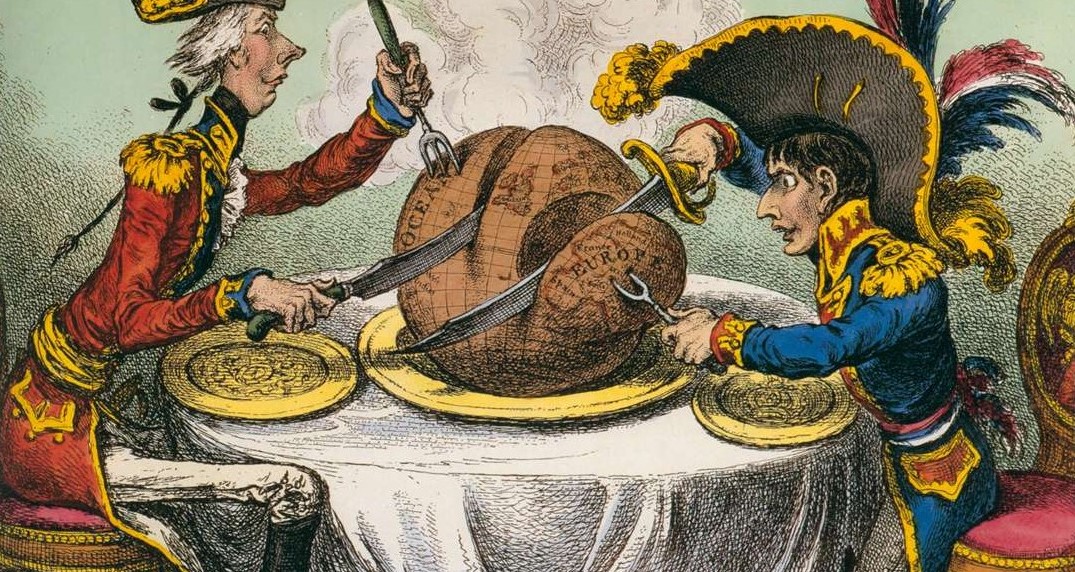
Image - Digital Journal

What this ignores is that the experience of colonialism in Asia (particularly India and China) is really the experience of the downfall of empires. Both the Mughal Empire and the Ming/Qing Dynasty were, at the point of contact with European traders, hugely rich and powerful civilisations. And both these empires collapsed slowly, over decades, as much because of internal divisions, mismanagement and weak political systems, as because of European aggression. European colonialism becomes the catalyst that accelerates the process of decay, with wealthy traders backed up by national militaries taking advantage of local conditions to expand opportunities for profit.

So what you have is a powerful empire at the point of maximum disequilibrium, with multiple factions taking advantage of a breakdown of established order, the introduction of individuals from widely disparate cultures trying to seize local advantages, and huge amounts of wealth changing hands.

This is a cracking premise for a game setting. 

Works Cited White Lotus Rebellion. (n.d.). Retrieved Oct...

BASICALLY:

I want to write and play McAsian New-School-Revolution D&D, and put the shifting upheavals from the time of 18th/19th century colonialism front and centre.

I want Zedeck Siew's Lorn Song of the Bachelor, but a genre, and without the simplistic colonialist-bad / natives-oppressed discourse that dogs so much of modern conversations about colonialism.

I want tea-houses and fishing villages and merchant junks, and I want frog-men and accursed gunpowder and humid jungles. I want the opulence of Qing Dynasty China but without the assumptions of exoticism. I want Outlaws of the Marsh. I want the PCs to seriously contemplate buying a war elephant and putting a machine-gun on it. 

BROAD STROKE PRINCIPLES:

I want to keep thinking about this. It'd be easy for this to spin out and become so complex that 1) I'll never make anything and 2) nobody will actually engage with it except a history-nerd GM out there somewhere. I'd want something as simple to run as Electric Bastionland, but with structures in place that will naturally lead to the kind of play I'm thinking of.

In no particular order: 

- Cultural exchange alongside cultural chauvinism - Culture is complex. Both colonialist and local empires have individuals who believe in the superiority of their own nation. Locally, cultural contact results in fusion as well as conflict. Foreigners 'go native', locals adopt foreign dress and seek foreign knowledge as part of attempts to modernise. 

- Locals are not scientifically illiterate, exotic, or mystical - Locals are unable to compete because they lack the industrial base / are too fragmented, not because they're ignorant. By this point, locals are able to replicate foreign military technology / tactics on a small scale. Locals have access to magic, but so do foreign empires.

- Colonial indifference, profit motive, and rivalry - Colonialist empires are fragmented: there is no single invading army, but there are individual trading towns, merchant companies and military detachments. The colonial theatre is an afterthought in comparison to vaster conflicts elsewhere. Colonial empire moves are always rooted in small-scale grabs for profit or advantage, or to play out inscrutable national rivalries.

- Colonial power - Colonialist empires are powerful. A single squadron of ships-of-the-line can wipe out a major port city. What stops this from happening is that 1) the status quo is too profitable 2) empires can achieve their goals through other, less drastic means and 3) other powers can send an equally powerful fleet 

-  Unstable power dynamics (trios are the most unstable) - There are 3 major colonial empires, each operating through merchants and proxies. There are multiple warlords / princes / chiefs with competing interests. There are multiple factions in the local empire's court. 

- Local collusion as much as local resistance - Princes hire foreign detachments to press their claims against rivals. Colonial empires back particular factions at different points. Local overseers run plantations and mines for foreign merchants. 

- Collusion occurs vertically across social class - Local princes might align themselves with a foreign power. Local soldiers serve in sepoy companies. Local merchants form the bulk of the economy in a  foreigner-run trading town. 

- PCs are given ample opportunity to collude - Collusion is far more profitable than resistance. Choices made to collude now result in unforeseen consequences. A job to rid the foreign-owned mine of ghouls means a rapid expansion in the use of low-paid labourers. Clearing the sea-lanes of pirates leads to an influx of brash foreign merchants. 

- PC freedom of movement - Sandbox play designed around multiple islands / piratical PCs to allow them to go where they want easily. Major powers often don't pursue vendettas to the death: PCs can change sides (though not without consequence)

- Colonial actions lead to local suffering - In aggregate, colonial control is about maximising short-term profit. Funding for sepoy regiments leads to brutal taxation. Conscripted factory labour leads to famine as fields lack workers. Foreign merchants establishing trade monopolies bankrupts local artisans. Unrestricted free trade leads to the sale of opium, alcohol.

- Colonial actions lead to local stability - In aggregate, colonial control brings an end to violent chaos. Bandit gangs are eradicated. Trade routes are made safe. Dangerous creatures are eliminated. Violent war between local factions is ended in favour of one side or another.

- Wider events lead to local opportunity - Random world events drive opportunity for the PCs. A rival prince is assembling a treasure fleet. An intelligence war between two colonial powers leads to spying opportunities. The destruction of a prince's army means an ancient dungeon is now unguarded. A mutiny of local soldiers means a new warlord - with a large bounty on his head.

What was the result and revolt of 1857? - Quora


Wednesday, July 8, 2020

Gourmet Food Street


If you're a player in my home-game, please don't read this! I mean, you could if you want, but just think about the joy of DISCOVERY

-----

So my pirate wavecrawl game is going great. The players have finished the Sacre Bleu module (Fairmead is now known as Goblin Republic, which is like Banana Republic but with goblins instead of high fashion) and I seeded a couple of rumour hooks for follow-up stuff. They also have a sentient fungus friend named King Slaver that they dropped off at their home-port, who has set-up in Gourmet Food Street.

Last session, I asked the players which rumour they wanted to follow-up on so I could plan for it.

The unanimous response was FORGET PROFITABLE RUMOURS, LET'S HANG OUT MORE IN GOURMET FOOD STREET!

I love sandbox play.

------


Artist unknown


GOURMET STREET FOODCRAWL
The system is based off the GLOG, and uses roll-under, the Risk Die from the Black Hack and limited inventory slots. $10=1GP. Alter to suit your home game. 'Relevant tables' refer to the appropriate food/stall/NPC tables in Gourmet Food Street.

Mini-Games

Food Crawl
Push your luck. Divide your CON by 2. This is your eating capacity. Whenever you sample a new dish (roll on relevant table) pay $5, bank 50 bonus XP and roll a die. If you roll over your eating capacity, you’ve over-eaten! Deathly sick, vomiting, lose all that bonus XP. Start at d4, increase die size by 1 for each dish.

All U Can Eat
Eating Competition! $50 entrance fee. Roll up competitor names on relevant table. Divide your CON by 2. This is your eating capacity. Every round, describe an aspect of your eating technique and roll a die. If you roll over your eating capacity, you’re out. Start at d4, increase die size by 1 for each dish. Winner gets a food-related magic item. Runner up gets $200. Note: Competitors drop out at the end of rounds 2, 4 and 5.

Rich Lads on Tour
5 loudly-dressed fops from the mainland want to sample ‘local culture’. No taste whatsoever, will overpay for a ‘local guide’. Show players pictures of food: they have 20 seconds to create a name for the dish. Fops pay $10 per syllable, but won’t buy if they lose confidence in you. A bonus $20 for a bogus story about the food’s ‘exotic’ origins.

Food Taster – Diego’s Potions Dishes
A wizard is quitting his stressful wizard job to pursue his dream of being a chef. Wants volunteers to try his recipes. Unfortunately, his only experience in cooking is brewing illicit potions for horse-racing. PCs are given $50, and have to roll on the table. Duplicate rolls just induce vomiting.

1 Too spicy. Lose 1HP permanently. Your vomit is corrosive. Now, how to induce vomiting?
2 Garlicky. Disadvantage to all CHA Tests. You smell unpalatable to monsters.
3 Heavy Meal. Your bones turn to Lead. You can’t run, Disadvantage to swimming.
4 Gassy. You swell up, permanently. Lose an inventory slot, Advantage to floating, Disadvantage to diving.
5 MSG-induced premonition. You have a premonition of the future. 1 bonus reroll this session.
6 Flavour blast. Too intense. Lose your sense of taste permanently. Gain 100XP, transcendental experience.


Save the Soup
A prominent chef has slipped and is lying unconscious! The customers clamour for soup, but nobody is there to cook it! Every round, Test INT to toss herbs and salts into the pot. Failure = -1 Flavour. Success = +1 Flavour. Start at 0 Flavour. Waiter comes to serve the soup in Rd8 rounds.

Negative Flavour A disaster. Rampant food poisoning, you are banned from this establishment.
0-1 Unappetising. Customers complain and start to leave. Chef is unhappy when he wakes.
2-3 Appetising! Soup is saved. Chef tells you he ‘sees a lot of himself in you’, gives you $150 worth of tips.  
4++ Feted! Customers flock to see the cook and shake them by the hand. Make a new influential contact. Jealous chef seeks your downfall. (Note: chef looks like the villain from Ratatouille)


National Geographic, august 1960 :  Pekin, a pictorial record by Brian Brake from Magnum.
Brian Brake, National Geographic August 1960


1d6 Random Encounters

1 Gang of populist Classicists carry signs, harass a member of the New Alchemists. A one-sided beating is about to take place.
2 Two guards put up Wanted posters: they seek someone the PCs know. ‘Psst! Over here!’ A member of the New Classicists waves the PCs over, resentful of local authority.
3 Aggressive tout keeps telling PCs NOT to eat at a particular stall. Lucio has recently read (and misunderstood) a book on Reverse Psychology.
4 Commotion. A frog-man named Blert is being chased by an angry Brewer for eating a jellied bloat-fly. ‘Help! Don’t let him get me!’ He seeks his estranged father, Lutz, lost in the wide world.
5 Angry customers harangue serving staff. At the back, an open door reveals a chef sprawled on the floor next to a dead rat (See: Save the Soup)
6 Vinegar Knight on street-corner. ‘As the milk curdles and the fruit rots, so man returns to vinegar!’ Has pamphlets, knows password to the Pickling-Pits, where the righteous wrestle for the privilege to be interred. They will pay for rare animal specimens.

Where to Find Bangkok's Best Street Food While You Can - The New ...

Monday, July 6, 2020

Brevity in Writing, Gythora's Rest

I've been obsessed with Zedeck Siew's terse, evocative writing style recently.

Reading through A Thousand Thousand Islands, his South-East Asian RPG zine on itch.io, I've been struck by the extent to which he takes sentences to write what other modules would do in paragraphs. There's reams of world-building condensed here.

Take, for example, the entirety of this NPC entry in the Upper Heleng collection:


All of these are also up as sample pages on itch.io, so I figure I'm ok to share them

SRI JAHISHA, ITINERANT SWORDFISH

She struck a deal with Sahong, the fisherman who caught her. She would lend him
magic. In return, he would serve as steed and squire.

Fed a diet of swordfish vomit, Sahong is one of the strongest men alive. The pair roam
the uplands; Sri Jahisha wishes to see the un-oceaned world.

That's it. There's that lovely illustration of a man in a sarong shouldering a massive, garlanded swordfish, but that's all the text. Yet there's so much here.

1. Swordfish can talk
2. Swordfish have a knightly class, or they are knights
3. Swordfish are magic
4. Swordfish vomit makes you strong
5. This NPC pair is up for adventure and exploration. Lots of Don Quixote / Sancho Panza vibes

That's 5 discrete ideas in about 280 characters. Here's another:


AR-YM-SR, ARCHAEOLOGIST

A famous adventurer, now retired – the demon idols of the interior took too many of
his limbs. Will send you on missions.

“Six days east, following the Goldfish Canal, there’s a fort. Red walls, too smooth to
climb, no entrance.” He chuckles, a predatory grumble. “Thankfully I’ve got this keg
of blasting sulfur!”

Ar-Ym-Sr buys books and artefacts to destroy them. He locks such things in his under-
water treasury, where they rot in the river’s cleansing flow.

1. Crocodiles are NPCs.
2. Demons live in the interior, but there's treasure
3. There's a dungeon hook
4. Someone was building forts around here
5. You could rob this guy maybe
6. Someone might hire you to 'rescue' an artefact from his treasury

I love it. Go get Thousand Thousand Islands, also because more South-East-Asian fantasy is always a good thing.

All this is in contrast with Hot Springs Island, which I picked up recently and was reading through. There's so much text there: the faction summaries take up pages and pages, and if you forget anything at the table, you have to pause the game and spend time skimming. Now, it's a little churlish of me to complain about this, because Thousand Thousand Islands isn't a hexcrawl, and doesn't aim to provide the same kind of tools that Hot Spring Islands does... but I found reading the former a lot easier and enjoyable than making my way through the latter.

My point is just that this brevity in RPG writing is so useful. Let's talk about some advantages/features of good RPG hooks.

1. Readability
The number one. Short text is easy to read, easy to refer to, easy to look up. Modules with chunks and chunks of text are a pain to run on the fly. We're so used to this that it's standard advice to go through a module with a highlighter before you try to run it: that's always a sign that things aren't designed for play at the table

2. Freedom to Move
Terseness of writing = gaps = space where the GM is free to improvise. The mania for exhaustive detail in RPG writing can be debilitating: there's no space for the GM to make the world theirs. You're trying to replicate someone else's brain-space. See Luka Rejec's anti-canon

3. Evokes Discovery
OSR play leans heavily on Discovery as one of the modes of play. Typically, discovery is reserved for the PCs: the GM maps everything out, the PCs explore. Random tables go some way towards alleviating this. Terse, well-written prose that leaves room for imaginative speculation can do this too.

4. Disequilibrium / Instability
This one's more from Apocalypse World. A good hook suggests instability: something will change here, very soon, and PC intervention will only determine the shape and outcome of that change, not whether change happens. The world is a stack of slipping plates, and the PCs enter a chaotic system. Terse writing can leave room for possibility. (not a given, but I'm just putting this here anyway)

5. Approaches Poetry
Nobody really cares about this but me, I think, but that's ok. Treating RPG hooks as a form of poetry, with its own rhythms and movement, is a fun little thing to do.

Let's try this out. I knocked together a short series of prompts for a competition over the weekend. The prompt was to design or detail a waystation, inn or interstitial travelling space.

Here's what I made. It's not perfect: the intro para could probably be tightened, and some entries (eg, Location 4) could do with clearer stakes. But it's good enough, for my purposes.

------


ArtStation - Jungle somewhere -for sale 22x15.7" (57x40cm), Arthur Haas
By Arthur Haas


GYTHORA’S REST

Four days trek through the lush, alien growths of the lowlands, then another day’s climb up the hard carapace. There are handholds, crude walkways made of chitin and scabbing. A luminous sign, mounted with a sticky residue to the side of a jagged hole that still has traces of dark ichor.  It’s humid inside, and warm, but the clientele doesn’t mind. The barkeep scuttles down from the ceiling, cleaning his limbs.

1d6 Fixtures and Patrons

1 Kybbir the Barkeep
Cheerful, almost manic. His life-cycle is almost up: already the half-grown successor-head droops from his torso. Kybbir has 24 hours left to live and is desperate to leave some trace. He’s heard how some beings ‘paint’: pigments arranged on a rigid body, pregnant with meaning. Can you teach him?

2 Jorvi, Low-Gut Diver
Enthusiastic greetings. ‘Jorvi! Where’ve you been? Come sit by me!’ Jorvi is being piloted by a gutworm parasite living in his skull cavity, and is looking for somewhere to lay eggs. Another warm body will do.

3 Bartlett, Memory-carrier
Guileless, loudly lamenting. A scout from one of the upper hives, Bartlett is very far from home and doesn’t know how to get back. His memory sacs are bulging: eat one, and you’ll know the location of a precious, profitable chamber of untouched biomass. A scavenger-gang has taken note.

4 Plotts, Wallstrider Merchant
Pleasantly buzzed. ’Ah, you look a tough sort! Listen: I’m going Up-Gut in a few hours, and I could use someone like you along for safety!’ Offers a Wallstrider in payment. The Wallstrider in question is sick with Fungal Rot, and will suddenly drop dead in 1d4 days while climbing a vertical surface. 

5 Trill and Trull, Itinerant Missionaries
Intense, speaking in staccato-harmony. Two heads emerging from a half-split torso, preaching the message of Binary Fission. Offers to take you to the Caves of Multiplicity, where you can be plunged in the Holy Pools to begin the divine process of splitting.

6 Diane, Expert Haruspex
Distracted, terse. An expert navigator with a man-sized retractor strapped to her back for forcing tight crawl-spaces. Knows all the signs of gut-quake, parasite-swarm, gas-surge. Last night, she dreamt she drowned to death in a pus-flood. She knows this is the last journey she’ll ever undertake.

ArtStation - the OTHERS-'seven sins'-board game, adrian smith
Adrian Smith

1d6 Points of Interest

1 Enzyme Pools
Past a thin membrane, someone’s drilled a hole in the soft wall, and installed a tap: pools of digestive enzymes, mixed with glow-root and hard-flower, the house-special. There’s competitors that would kill to get theirs hands on a gourd of raw enzyme.

2 Grub Tunnels
Multi-limbed crawler-urchins squeeze through the tunnels, hunting for bar-grubs to serve to the patrons. One of them is stuck and calls for help. Unknown to everyone, a rogue antibody has gotten in the tunnels. Its blind lamprey-mouth seeks warm prey.

3 Barman’s Nest
Clusters of wasp-like eggs, stuck to the walls and ceilings. If left to hatch, this could be the start of a brand new colony. The largest town in the Gut has put the word out: none of those eggs must be allowed to hatch. A spy is already casing the bar, insinuating herself with the other patrons.

4 Nutrient Intake
A slurping, greedy nozzle like an elephant’s trunk drinks from a nutrient-vat. The Bar itself has to be regularly fed, for everything to work as it should. Kybbir’s running out of nutrient-slop, and will pay well for more.

5 Lookout Point
A short climb up through bone-laced tunnels, to a sudden drop. A stunning view of the Gut-Swamps far below, dimly lit by methane flares. A faint cry, on a lower ridge just out of sight. ‘Help! Help me!’ A deceitful mimic-fluke waits for fresh prey.

6 Empty side-chamber
A faint pulsing, felt through the floor. If you dig, a passageway leads to a chamber with a secondary brain, with a psychic null-lance still embedded in it from long ago. The null-lance is a valuable artefact, but if removed, a deep rumble: the slumbering Gythora himself starts to wake, his titanic limbs stir.

From the British Library's Public Collection