I've been trying to strip down game systems as much as possible recently. The OSR philosophy of 'rulings not rules' has felt wonderfully freeing, and Into the Odd/Electric Bastionland have sold me on roll-under systems, simple stat arrays, and dealing automatic damage (more on that some other time).
It's Initiative rolls that have been bugging me for a little while.
There's something about that formal switch into 'combat' that signals that this, this kind of interaction, is somehow fundamentally different from other kinds of interactions in D&D play, not to mention the rigid turn-taking seems forced and arbitrary.
I thought switching to Testing Dex to see if you go before/after monsters was elegant, but I eventually realised that, after the first round, it doesn't make any functional difference whether PCs go before or after. Let's say Shloo, Kouda and Eli are all fighting a bunch of goblins. They Test Dex and Kouda goes before the goblins.
The round looks like this:
ROUND 1:
Kouda
Goblins
Shloo
Eli
ROUND 2:
Kouda
Goblins
Shloo
Eli
See the problem? There's technically a whole chunk of actions spilling over from Round 1 to Round 2 that's really just one big group phase: Shloo, Eli and Kouda all act, and then the goblins act. For multi-round fights, by Round 4 or 5, you're basically just doing group actions.
Reading this post and this post made me think that having initiative isn't really buying any additional tactical choices for a party. At the same time, I'm not sure an initiative order that fluctuates based on attack rolls is much better: it's more randomness, but it also has weird edge cases that make it hard to come up with group plans. More so because I've committed to using automatic damage and roll-under stat, and I don't want to add in complexity I've already taken out.
I think anything that makes combat more like non-combat problem-solving is great, so I'm going to try something a little bit like PbtA, where actions of PCs and NPCs are happening simultaneously.
It would look something like this:
Every round, the GM sets up the situation in front of the PCs (in the same way that the GM gives information to prompt a choice in non-combat situations). The default is that most foes are simply charging and attacking, but the GM is free to hint at especially damaging foes winding up an attack, or introduce dilemmas.
Example: The five goblin warriors charge at Shloo, Eli and Kouda, swinging their swords. Behind them, the beast-master is fiddling with the mechanism of the lock on the slime-hound cage...
PCs declare collectively, before any dice are rolled, what they will individually do. They're free to attack (which automatically hits and deals damage), try out lateral solutions, or explicitly try to interrupt foes.
Example: Kouda will fire his pistol at the goblin warriors. Shloo tries to push past the goblins and cast sleep on the beast-master. Eli will help Shloo.
The GM adjudicates and resolves actions simultaneously. Damage is automatically done, unless PCs have explicitly found a way to negate or reduce damage (I'm using 'impaired damage' rules from ItO that downgrade weak hits to a d4)
Example: The goblins collectively deal their damage to Shloo, Kouda and Eli based on positioning. Kouda deals damage to the goblins. Shloo makes a Strength Test to push through, with Advantage because Eli is helping, then casts sleep. If she fails, the beast-master releases the slime-hound, which will make its attack.
Conceptually, I'm thinking of the PbtA concept of hard vs soft moves. PbtA can sometimes be a little too PC-centric for my taste, but I like the central idea that the GM introduces a complication, and then PCs roll to respond to it. Whereas in PbtA, the 'soft move' assumption is that damage can be avoided (The goblin is hacking at your shield! What do you do?), here the OSR combat-is-deadly assumption is that damage is a given, and you want to end the combat quickly before it becomes a problem.
There's plenty of grey areas of course: PCs shouting 'I shoot him before he can fire!' for instance. But I wonder whether I'm just over-complicating this: one of the appeals of the OSR philosophy is being able to make rulings on weird edge cases, and there's a whole arsenal of tools that OSR GMs have for non-combat encounters (Fortune rolls, Advantage/Disadvantage, Test a stat, so on and so on). As a GM, I could probably figure something out.
Note:
In the edge case above, I'd say that attacks that aim to kill or incapacitate are already the assumption of automatic damage, so the player would deal and take damage as per normal. But maybe they could trade reduced damage to reduce an enemy's damage die with harassing fire...
But what about getting the drop on your enemy???
This is the one advantage to an initiative system that I can think of. I'd just adjudicate surprise as a separate thing in and of itself: if your PCs achieve surprise, they do damage before anyone can act. Vice versa for your NPCs. Neat and simple.

Wednesday, June 3, 2020

Sunday, May 17, 2020
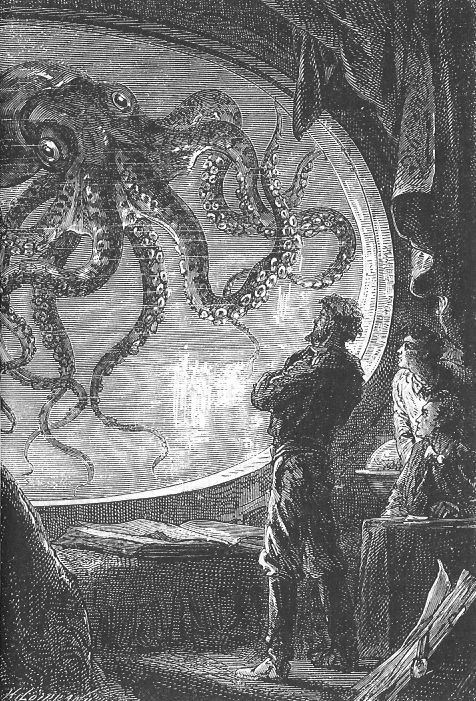
Enthusiastic Pirate Bois: An OSR Wavecrawl rpg
 |
| Illustration from 20,000 Leagues Under the Sea |
I give you:
Enthusiastic Pirate Bois v1.1
ESP Player Reference + Character Sheet v1.1
EDIT (updated changes):
Enthusiastic Pirate Bois v1.6
Enthusiastic Pirate Bois v1.6 (Core Rules for Players)
ESB Character Creation v1.6
The main source of inspiration was the excellent Counter-Colonial Heistcrawl, and the bones of the rules and classes are taken from Coins and Scrolls' Pirate GLOG. The sailing system is my own.
I've made edits and hacks along the way, including:
Expedition resources from The Scones Alone blog
Carousing rules from Jeff Rients
Usage Dice from The Black Hack 2E
Fast combat resolution and Company rules from Into the Odd
Carousing rules from Jeff Rients
Usage Dice from The Black Hack 2E
Fast combat resolution and Company rules from Into the Odd
Haggling for sales price from The Ultraviolent Grasslands
The design principles were to make something:
- Quick to pick up
- Roll under
- No fiddly bonuses
- Fast combat resolution
- Less math (with the exception of getting/spending loot because pirates love to count loot)
- NOT a generic Caribbean pirate-crawl
It includes
- Decadent slug-people
- Weirdly bureaucratic mole-men
- Systems for individual, crew and ship combat
- Loot tables
- Encounter tables for safe -> dangerous -> uncharted sea lanes
- A carousing table where you can drink so hard you forget your identity like the protagonist from Disco Elysium
- A retirement table where you can become Jay Gatsby
- Opium, colonialism, anti-colonialism (if you like)
Also I read The Rime of the Ancient Mariner and why has nobody ever made a game from that yet?
Races and islands were collaboratively written by the table. There's wizards in there because one of my players really wants to be a wizard but feel free to drop them if you don't want them.
I am inordinately proud of the random tables. I'll probably make an additional table in the future for random sea-ports/villages and rumours, but the rule-set is playable as is.
I am inordinately proud of the random tables. I'll probably make an additional table in the future for random sea-ports/villages and rumours, but the rule-set is playable as is.
Sunday, May 10, 2020
Yet Another GLOG Hack
Here's yet another hack based off Skerples' GLOG rules and The Black Hack 2E.
I made it to solve specific issues at my table (see below)
There's two version: v0.2 is really just the GLOG and the Black Hack mashed up, while v0.5 incorporates all sorts of other, weirder changes: fast combat from Into the Odd, thoughts on inventory systems from DIY & Dragons, Arnold K's popcorn-treasure, and other tinkering.
v 0.2 (GLOG+Black Hack)
v 0.5 (All sorts of stuff, like a stir-fry)
ISSUES IT'S TRYING TO SOLVE:
- As little math as possible.
Everything is either Advantage/Disadvantage or stepping die sizes up or down
- Inventory systems count as math. Buying supplies takes FOREVER. Players are bored by book-keeping.
This is the least OSR thing, maybe. All adventuring gear is simplified down to 1 of 4 generic packages: Supplies, Camp Gear, Tools, and Torches. If 1 player has a package, there's enough for everyone. Packages either can be tested for special bonuses, or are there for the GM to impose location/time pressure. The party starts with all 4 packages and can dive right in.
- Players don't really care about inventory slots in short sessions.
Limited inventory systems. Armour takes up a lot of slots. Treasure is always Bulky.
- High-level players are hitpoint sinks
GLOG tops out at Level 4 for class templates. HP is low across the board. The Black Hack's armour system is there to give players an 'out', but extended adventuring is a risky choice. No heal-bot clerics: you get a weird priest type instead, who's like a very religious bard.
- Magic is a bit boring in TBH
I just used the GLOG's magic system.
- Low investment in XP / What kind of tone are we going for here?
This could just be my table: my players don't really care about the Black Hack's XP systems, so I created 3 so they could choose a tone they wanted.
- No retirement tables
I made a retirement table.
- I quite like mutation tables. The Black Hack one is a bit gonzo, isn't it?
I made a less gonzo mutation table.
HEY U FORGOT MONSTER STATS
For monsters, all you need is a Level (i.e. a hit die), an armour value from 1 to 3 (which functions as straight damage resistance), a damage die, and a list of special abilities.
As so:
Ogre (Level 5), Armour 2, d10.
(Seize and fling. Test Dex or be grabbed and thrown at another PC. d8 to 2 PCs)
----
Salt and pepper with your favourite subsystems as you wish.
I made it to solve specific issues at my table (see below)
There's two version: v0.2 is really just the GLOG and the Black Hack mashed up, while v0.5 incorporates all sorts of other, weirder changes: fast combat from Into the Odd, thoughts on inventory systems from DIY & Dragons, Arnold K's popcorn-treasure, and other tinkering.
v 0.2 (GLOG+Black Hack)
v 0.5 (All sorts of stuff, like a stir-fry)
ISSUES IT'S TRYING TO SOLVE:
- As little math as possible.
Everything is either Advantage/Disadvantage or stepping die sizes up or down
- Inventory systems count as math. Buying supplies takes FOREVER. Players are bored by book-keeping.
This is the least OSR thing, maybe. All adventuring gear is simplified down to 1 of 4 generic packages: Supplies, Camp Gear, Tools, and Torches. If 1 player has a package, there's enough for everyone. Packages either can be tested for special bonuses, or are there for the GM to impose location/time pressure. The party starts with all 4 packages and can dive right in.
- Players don't really care about inventory slots in short sessions.
Limited inventory systems. Armour takes up a lot of slots. Treasure is always Bulky.
- High-level players are hitpoint sinks
GLOG tops out at Level 4 for class templates. HP is low across the board. The Black Hack's armour system is there to give players an 'out', but extended adventuring is a risky choice. No heal-bot clerics: you get a weird priest type instead, who's like a very religious bard.
- Magic is a bit boring in TBH
I just used the GLOG's magic system.
- Low investment in XP / What kind of tone are we going for here?
This could just be my table: my players don't really care about the Black Hack's XP systems, so I created 3 so they could choose a tone they wanted.
- No retirement tables
I made a retirement table.
- I quite like mutation tables. The Black Hack one is a bit gonzo, isn't it?
I made a less gonzo mutation table.
HEY U FORGOT MONSTER STATS
For monsters, all you need is a Level (i.e. a hit die), an armour value from 1 to 3 (which functions as straight damage resistance), a damage die, and a list of special abilities.
As so:
Ogre (Level 5), Armour 2, d10.
(Seize and fling. Test Dex or be grabbed and thrown at another PC. d8 to 2 PCs)
----
Salt and pepper with your favourite subsystems as you wish.
Saturday, May 2, 2020
One-Shot Adventure: The Day of Fools
 |
| Credit: Mariusz Sawiński |
I made a one-page system-neutral starter adventure:
The Day of Fools v2.0
These days, I normally run short sessions for new players (around 2.5 hours or so), so I wanted to make something that could be run in that time.
I'd probably run this with Into the Odd.
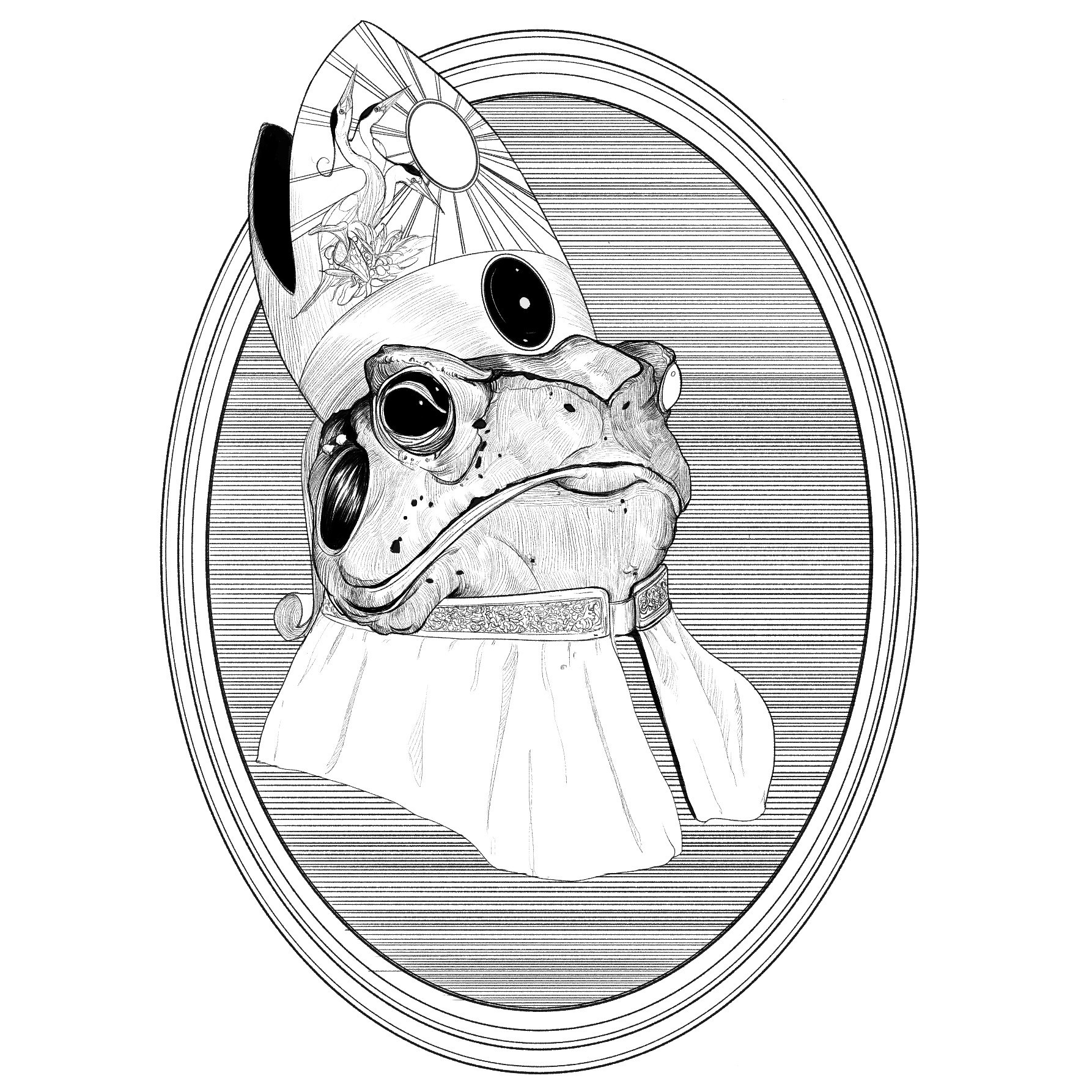
The adventure's really designed to teach problem-solving. All the ogres are probably too tough to fight on their own, but you could trick them, flatter them, distract them etc. PCs have to figure out how to negotiate with Mellifax and Muddrick without upsetting them as much as possible.
Also I really wanted to have frog-priests.
Sunday, April 26, 2020
GLOG Class: Memory Monk, (Post) Colonial forgetting
Reading Zedeck Siew's musings on South-East Asian hantu, I was struck by one section:
It's almost embarrassing. I studied English Literature for my degree: I could tell you about the fey or Arthurian romance, or renaissance-era religion, but there's a big question-mark over the stories of the region I actually live in, aside from half-remembered children's stories. Doubly so, because I'm ethnically Chinese, a fourth-generation migrant, meaning the mythology of my land is not the same as the mythology of my ethnicity. Postcolonialism is the experience of forgetting, of knowing that you should know something but you don't.

Anyway, here's a GLOG-class.
----
Scholars debate the exact origin of gods, but they all agree on one thing: each god has incredible power over a small limited domain. And despite that, each god is greedy, and insatiable, and wants more.
It is, after all, common knowledge that the Blood God requires blood. Shrines to the blood-god always include a jar of engorged leeches, for tithes. Acolytes of the Swollen Fertility Goddess must swear vows of childlessness. And monasteries to Cinta, the Open-Hearted God of Love, are rife with betrayal and politicking. These are sacrifices that devotees make because their god craves these things.
Deep in the highlands, on the red ridges of the jungle mountains, a sect exists that worships the God of Memory.
Monks of Memory
The novices of the God of Memory travel long distances from their mountain monasteries in search of experiences, which can then be offered up to the God of Memory, whose name nobody now remembers.
Starting Equipment: heavy robes (as leather), iron cudgel, forgotten trinket (roll on table)
Skills: Literacy, Religion
A: Tithe, Forgotten Things
B: Tithe, Self-Edit, Forgettable
C: Tithe, Take Memories
D: Tithe, Erasure
Forgotten Trinket: you carry an item of significance around with you, but can no longer remember why. Roll 1d6
1. A loop of hair, bound in red silk
2. A fragment of rich brocade
3. An ivory carving of a mounted rider
4. A polished human fingerbone
5. A miniature painting of a stranger
6. A jasmine-scented letter you cannot read
A: Tithe
At first level, list down a significant memory you have tithed to the God of Memory. It can be things like the sound of my mother's voice, or the face of my mentor. Every time you take a level in this class, detail another memory that you have forgotten. The last significant memory you will tithe is your name. Once you tithe your name, you can only ever be addressed as Monk. Your true name is lost.
A: Forgotten Things
The monk may call on the God of Memory to remember things forgotten, or secrets concealed. You may Test Wisdom when confronted with a situation that has been forgotten by living memory (Eg, an ancient trap-mechanism, a dead sorcerer-king's tomb from a hundred years ago.) If you succeed, the God of Memory reveals useful memories about this place. On a failure, the memories are false, partial or misleading.
B: Self Edit
Your memories are plastic, and can be edited by you. You have an eidetic memory. You can ignore the effects of long-term mental trauma by conveniently forgetting it.
B: Forgettable
The God of Memory has claimed you, and so you do not stick in the minds of others. If you do not draw attention to yourself, you can pass as a banal servant, a background figure, a harmless bystander. There is a 1 in 6 chance you will not be remembered when you meet someone again.
C: Take Memories
If you concentrate for a few moments, a series of ritual blows on the head from your cudgel can scramble someone's short-term memories. Your opponent has to be restrained or vulnerable in some way in order to deliver the blows. The target loses all memory of the last hour. The GM can choose to reroll on the Reaction Table if appropriate.
D: Erasure
You know a ritual that can erase a person from remembrance. It takes a week, a cart-load of herbs and rare metals, and a part of the person in question (hair, teeth or fingernails work fine). The person's name is forgotten, and all their acquaintances can no longer remember them. The God of Memory will take a valuable memory from you in exchange. A very well-known target (like a king or vizier) might require a higher price, like the knowledge of how to walk.
Just yesterday somebody idly asked me whether I’d categorise the jiangshi as a revenant, zombie, or vampire.
The answer is both all, or neither, of course. The hopping ghost doesn’t scan to any one western typeset.
Nevertheless it can be a relevant query - because post-colonialism is a thing, and creators have to deal with how central the Occident is to our thoughts and imaginations.
He's right, of course. There's games that deal with the experience of colonialism, like Dog Eat Dog, or place you in the resistance against it, like Spire, but Zedeck's talking about what comes afterwards.It's almost embarrassing. I studied English Literature for my degree: I could tell you about the fey or Arthurian romance, or renaissance-era religion, but there's a big question-mark over the stories of the region I actually live in, aside from half-remembered children's stories. Doubly so, because I'm ethnically Chinese, a fourth-generation migrant, meaning the mythology of my land is not the same as the mythology of my ethnicity. Postcolonialism is the experience of forgetting, of knowing that you should know something but you don't.

Anyway, here's a GLOG-class.
----
Scholars debate the exact origin of gods, but they all agree on one thing: each god has incredible power over a small limited domain. And despite that, each god is greedy, and insatiable, and wants more.
It is, after all, common knowledge that the Blood God requires blood. Shrines to the blood-god always include a jar of engorged leeches, for tithes. Acolytes of the Swollen Fertility Goddess must swear vows of childlessness. And monasteries to Cinta, the Open-Hearted God of Love, are rife with betrayal and politicking. These are sacrifices that devotees make because their god craves these things.
Deep in the highlands, on the red ridges of the jungle mountains, a sect exists that worships the God of Memory.
 |
| by Minsu Kim |
Monks of Memory
The novices of the God of Memory travel long distances from their mountain monasteries in search of experiences, which can then be offered up to the God of Memory, whose name nobody now remembers.
Starting Equipment: heavy robes (as leather), iron cudgel, forgotten trinket (roll on table)
Skills: Literacy, Religion
A: Tithe, Forgotten Things
B: Tithe, Self-Edit, Forgettable
C: Tithe, Take Memories
D: Tithe, Erasure
Forgotten Trinket: you carry an item of significance around with you, but can no longer remember why. Roll 1d6
1. A loop of hair, bound in red silk
2. A fragment of rich brocade
3. An ivory carving of a mounted rider
4. A polished human fingerbone
5. A miniature painting of a stranger
6. A jasmine-scented letter you cannot read
A: Tithe
At first level, list down a significant memory you have tithed to the God of Memory. It can be things like the sound of my mother's voice, or the face of my mentor. Every time you take a level in this class, detail another memory that you have forgotten. The last significant memory you will tithe is your name. Once you tithe your name, you can only ever be addressed as Monk. Your true name is lost.
A: Forgotten Things
The monk may call on the God of Memory to remember things forgotten, or secrets concealed. You may Test Wisdom when confronted with a situation that has been forgotten by living memory (Eg, an ancient trap-mechanism, a dead sorcerer-king's tomb from a hundred years ago.) If you succeed, the God of Memory reveals useful memories about this place. On a failure, the memories are false, partial or misleading.
B: Self Edit
Your memories are plastic, and can be edited by you. You have an eidetic memory. You can ignore the effects of long-term mental trauma by conveniently forgetting it.
B: Forgettable
The God of Memory has claimed you, and so you do not stick in the minds of others. If you do not draw attention to yourself, you can pass as a banal servant, a background figure, a harmless bystander. There is a 1 in 6 chance you will not be remembered when you meet someone again.
C: Take Memories
If you concentrate for a few moments, a series of ritual blows on the head from your cudgel can scramble someone's short-term memories. Your opponent has to be restrained or vulnerable in some way in order to deliver the blows. The target loses all memory of the last hour. The GM can choose to reroll on the Reaction Table if appropriate.
D: Erasure
You know a ritual that can erase a person from remembrance. It takes a week, a cart-load of herbs and rare metals, and a part of the person in question (hair, teeth or fingernails work fine). The person's name is forgotten, and all their acquaintances can no longer remember them. The God of Memory will take a valuable memory from you in exchange. A very well-known target (like a king or vizier) might require a higher price, like the knowledge of how to walk.
Thursday, April 23, 2020
Alternative XP Systems
So I've been thinking about XP systems as a driver of play recently. I've been spending quarantine throwing together a hack of the GLOG, the Black Hack 2E, and other bits, and I was writing up different XP systems and trying to represent different schools of thought.
Please note that all titles are the actual ones I've used in my hack, and are entirely self-deprecating.
GRASPING CAPITALISTS (blatantly stolen from Goblin Punch)
Over the course of your adventure, you might discover Treasure, if you look. You will know it when you see it. (eg, a jewelled egg the size of a fist, a coruscating crystal of pure life-force, an ancient tome with the names of all the angels)
Each
Treasure is worth one level, to only one player. At the end of the adventure,
discuss as a group who contributed the most to the party and why. That player
takes a d12 die. Discuss who was the most entertaining, and why. That player
takes a d10. They cannot be the same player. Then
everyone rolls:
1d10+(Bonus die)
Give out
Treasure in order from highest to lowest rolls. Re-roll ties. Loop around if
you somehow have more treasure than players.
This is really for me the distillation of the OSR gold-as-xp approach: you're meant to go into dungeons and weird places. You're meant to stick your hand down weird holes and feel about for things and pull out glowing gems from frog-idols and run away from yetis that don't want you to take the gems.
 |
IMPULSIVE MANCHILDREN (The Black Hack's approach)
Every PC requires XP equal to their level to advance.
Every
session, XP is awarded for the following activities:
-
Failing
catastrophically in an entertaining way
-
Overcoming
an important named foe or obstacle
-
Seizing
an especially valuable treasure
-
Completing
a quest for an NPC
-
Achieving
some difficult and worthwhile personal goal
If in
doubt, the table discusses if it’s worth an experience. This
rewards PCs for all the screwing around they were going to do anyway. Awarding XP for a 'difficult and worthwhile personal goal' is really just codifying giving players XP for the ludicrous things they already want their PCs to do, like declaring a personal vendetta against the town shoemaker because of reasons.
Really, this is a sort of PbtA approach to XP. Whatever the characters choose to do is ipso facto an important act. XP for you! And XP for you! XP for everybody! Pursue your bliss.
XP for catastrophic failure is also very story-games. The intent is less on solving problems and overcoming challenges, and more just poking a reactive world and seeing what happens. Failures are entertaining detours, not something to avoid with conservative play.
 |
QUIRKY MISFITS SOLVE A
CRIME (Dungeon World's approach with Traits thrown in)
Every PC requires XP equal to (current level+4) to level up.
As a group,
at the end of every session, answer the following questions:
-
Did
we defeat a powerful foe?
-
Did
we discover a valuable treasure?
-
Did
we learn something new and important about the world?
-
Did
we work together to achieve our goal?
For every
one you answered yes to, gain 1 XP.
In
addition, each PC should write two traits that define their character.
Traits should be an action or behaviour that disadvantages the PC in some way. For
instance:
Honourable – Refuse to gain an unfair advantage
over a foe
Impulsive – Reject planning to leap into a problem
Kind – Help someone weak at a cost to myself
Impulsive – Reject planning to leap into a problem
Kind – Help someone weak at a cost to myself
You may
gain 1 XP if you act out one of your traits per session. You may not get this
XP more than once.
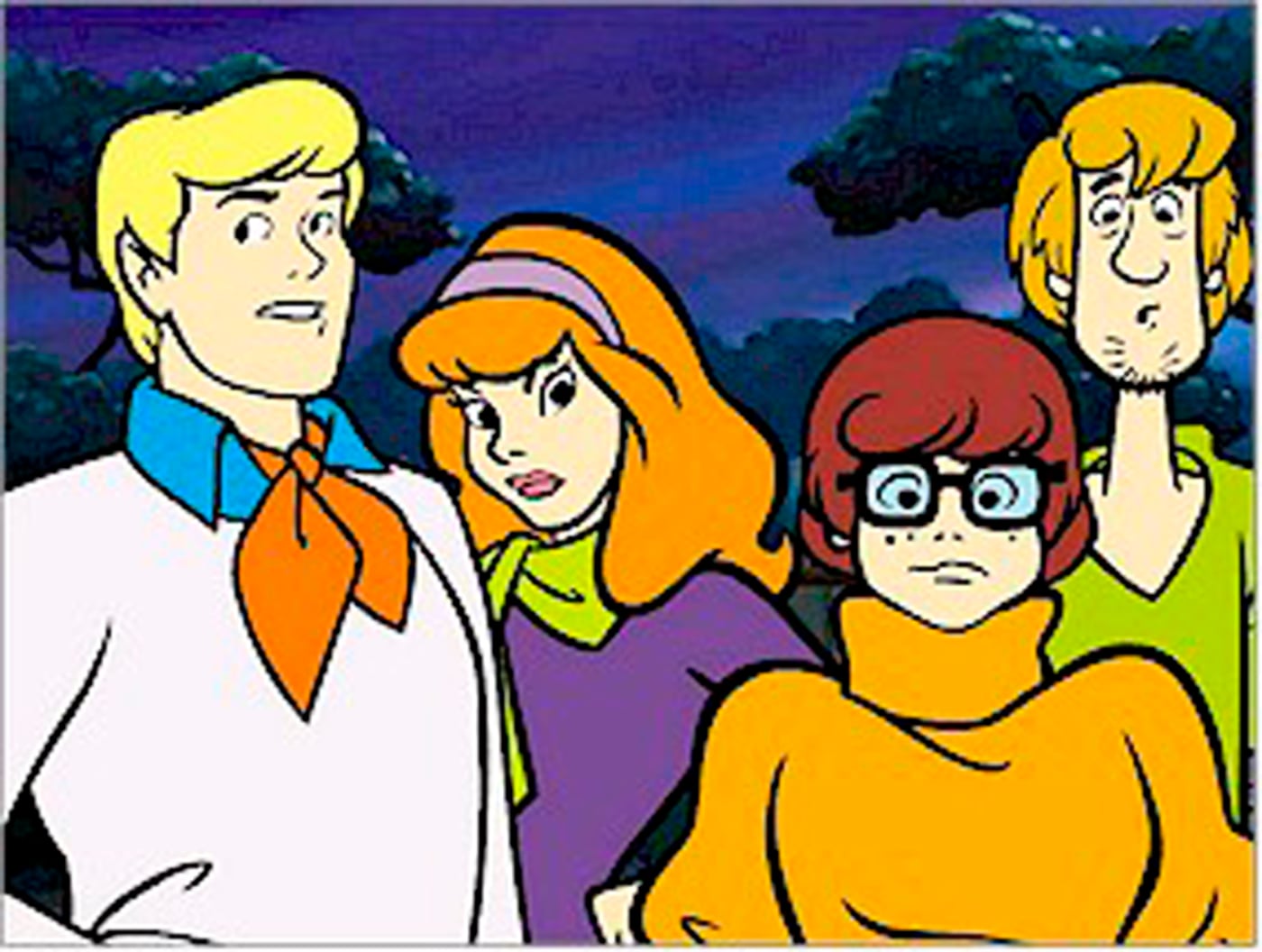 |
A PbtA player-as-a-barbarian would absolutely insult the troll king mid-negotiation because it's what the fiction demands. An OSR player, not so much, I think? I feel I need to see how other tables and play cultures handle this.
-----
The thing is, all of these approaches remind me a little of how D&D as a genre is really very American. By which I mean the central conceit is that you have these rugged individualist types running around, problem solving or actualising or seeking treasure, and they're making their mark on the fictional world and also becoming more skilled and capable versions of themselves.
I was reading a blog-post which I cannot find anymore for the life of me, which argued that early Gygaxian D&D wasn't drawing from european sources, but from the Wild West: these enterprising types going out into essentially untamed wilderness and coming back with treasure.
Are there other ways of playing D&D? Reading counter-colonial Hexcrawl and marxist D&D have me thinking of alternative reward structures in addition to alternative campaign framings, but all the ones I know lean in the direction of story-games: XP triggers that seem to reward a particular genre experience. 'XP for opposing tyranny' or 'XP for wealth redistribution' seem to make assumptions about 'correct' moral values which run against the freedom of sandbox play.
What do?
Monday, April 20, 2020
D&D isn't fun enough (or: Enthusiastic Skeleton Boys)
What I mean by this (hyperbolic) statement is that modern iterations of D&D, with an emphasis on elaborate settings, tightly balanced mechanics (combat, because it's always combat), and insistence on narrative and character development can miss the forest for the trees.
D&D isn't enough about play.
D&D should be a modern day Feast of Fools. It should be about chugging all the potions on the wizards shelf. It should be about setting the courthouse on fire. It should be about a frog-priest giving a sanctimonious liturgy to a mutant crab-man who used to be the wizard.
My personal theory is that the aesthetics of ruin are useful because they give players permission to play garbage people. I don't mean edgy grim-dark i'm an orphan and fight crime people, or i steal from the paladin because i'm an amoral rogue ho ho. I mean the kind of garbage person who would find a centuries-old crusted pot in the tomb of a God-King and lick the rim on the off-chance they get super-powers.
Play your PCs like they're stolen cars. Die horribly. Roll up a new one.
--------
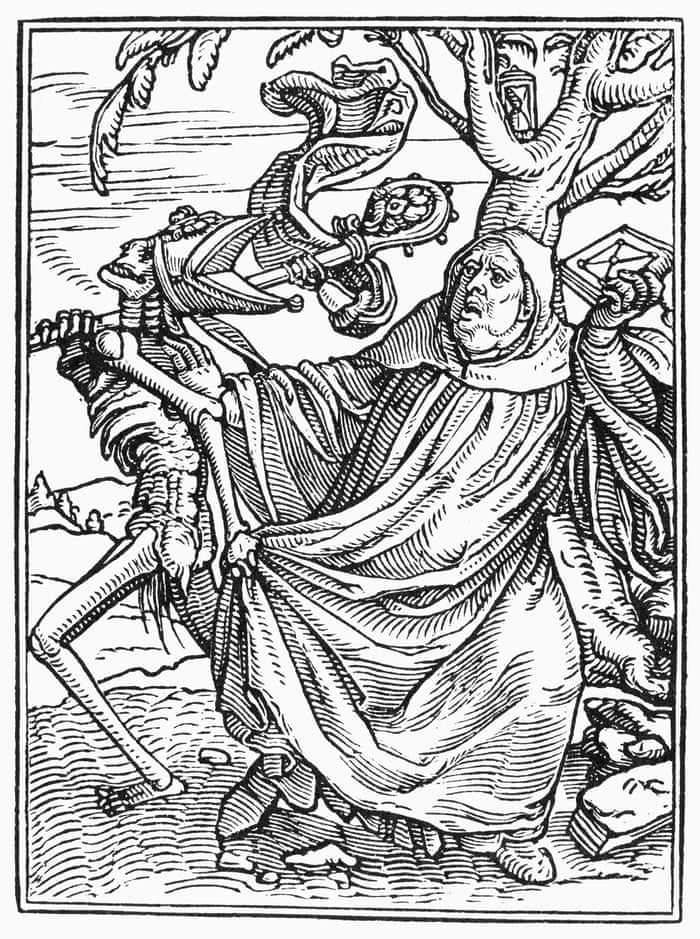
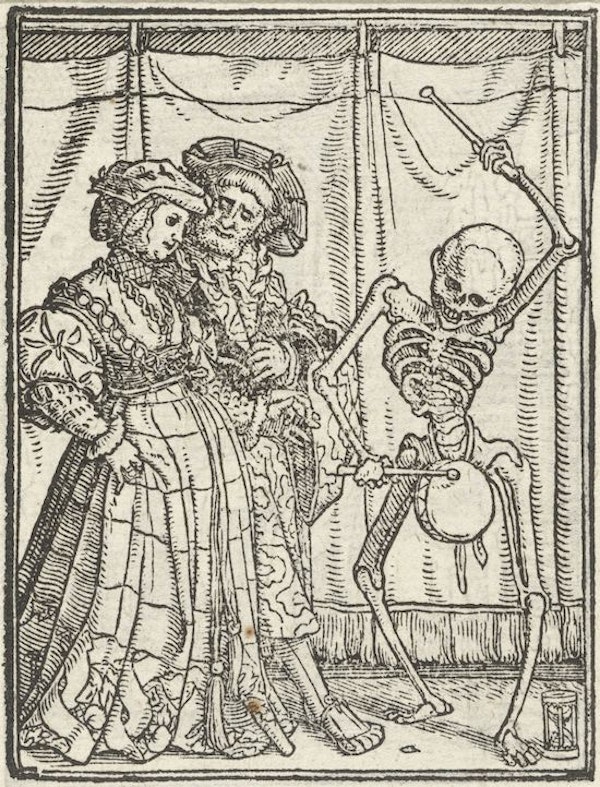
ENTHUSIASTIC SKELETON BOYS (with apologies to Holbein the Younger)
Death is horrible.
The body rots away, the soul-stuff leaks and dissipates into the aether,
So why are skeletons in such a good mood all the time?
 |
Sure, when you summon a skeleton it'll do what you want. Why not? What a lark. They'll prance and twist and hold parties if you let them. They're polite to you because you brought them back, like a someone inviting them to a ball. They'll stab a man for you because hey we're all going the same way. It's like helping a man with his coat. Off, ye lendings.
If you meet a skeleton and they're not trying to kill you (nothing personal!), they're prodding at your flesh and clacking their teeth in amusement at how much meat you have on you.
This is also why necromancers are always jolly and giggly and corpulent, like a morbid santa. You know that thing in public speaking where you're meant to imagine your audience naked? It's like that but all they see are bones bones bones
What are these skeletons up to? (1d8)
 |
| i am the law you're coming with me |
This is also why necromancers are always jolly and giggly and corpulent, like a morbid santa. You know that thing in public speaking where you're meant to imagine your audience naked? It's like that but all they see are bones bones bones
 |
| i mean look at this guy, he's having a ball |
1. Playing a game of nine-pins with their own bones
2. Trying to get a terrified peasant to dance
3. Taunting a confused owlbear (skeletons don't smell like food)
4. Pretending to be dead so they can jump up and spook yez
5. Found some robes somewhere and quietly joined a group of pilgrims. Just waiting for when someone asks them to tell a story.
6. Intercepted a travelling theatre-troupe. Holding a play with their props while the actors cower.
7. Kidnapped a cow, fleeing the scene
8. Intentionally misunderstanding frustrated junior necromancer
Subscribe to:
Posts (Atom)